

 Global connections
 Research & archive






Historical material. Dates, proposals and invitations refer to the time of the original publication.
Israel is once again holding a Knesset election. In the April election, Benjamin Netanyahu's Likud won 35 seats, while its main rival, Blue and White, won 35.
Netanyahu was given the mandate to form a governing coalition after 65 Knesset members recommended him. Yet neither in the 28 days provided by law nor in the additional 14 days granted by the president was he able to form even a narrow coalition of 60 members.
Rather than allow another Knesset member to attempt to form a government, as envisaged by law, Netanyahu preferred another election. Any outcome other than a repeat election threatened the incumbent prime minister with losing his position, so Likud introduced and swiftly passed a bill for fresh elections.
As a result, following the Knesset election of 9 April, Israel will return to the polls 161 days later, on 17 September 2019.
Party alliances
A total of 32 parties and alliances submitted lists, 15 fewer than the record 47 registered for the election to the 21st Knesset.
The trend in this election is the consolidation of parties and alliances. The Arab parties and the communists reunited in the Joint List, led by the communist Ayman Odeh. Ayelet Shaked, who failed to enter the Knesset in the previous election, headed a right-wing alliance bringing together the New Right, Rabbi Rafi Peretz's Jewish Home and Bezalel Smotrich's National Union, the latter two being ministers in the 'government of Halakha'. Labor also joined forces with Gesher, and Meretz with Ehud Barak in the Democratic Union.
As in the previous election, Netanyahu is seeking to unite and consolidate the right-wing parties. For example, he is actively urging right-wing voters to support Likud rather than the far-right Otzma Yehudit, which is not expected to cross the electoral threshold. Moshe Feiglin's Zehut, which failed to enter the Knesset last time, accepted the prime minister's persuasion, withdrew from the race and called on its members to vote for Likud. Zehut's leaders will evidently join the new government.
Despite Netanyahu's efforts to unite the right-wing camp, disputes periodically erupt within it. At a closed Shas conference, party leader and Interior Minister Aryeh Deri said Netanyahu might maneuver into a deal with Blue and White and Yisrael Beiteinu, forming a government with people who eat pork and violate the Sabbath. At other times, leaders of the Yamina alliance attacked Netanyahu, accusing him of trying to destroy religious Zionism. Ayelet Shaked said the prime minister was waging an unprecedented war against Yamina. Naftali Bennett warned voters about the Trump plan that Netanyahu was concealing and urged Likud voters and local council leaders in the territories to 'wake up' and vote for Yamina, arguing that only it could avert disaster. Despite these embarrassments, Netanyahu decided that, in negotiations to form a government after the election to the 22nd Knesset, Shas, United Torah Judaism and ministers Rafi Peretz and Bezalel Smotrich would not be disadvantaged even if they won fewer seats than previously. Positions and portfolios would therefore be allocated as if Shas and United Torah Judaism had eight seats each and Jewish Home had five, even if their actual results were lower. If these parties won more seats, the allocation would be adjusted in their favor. Thus, radical politicians would hold most positions in Netanyahu's government.
In the final days before the election, Avigdor Lieberman said that the ultra-Orthodox and messianic bloc could win 61–62 seats.
These fears are supported by three pre-election polls published by Kan, Israel Hayom and the parliamentary television channel. All show the religious right gaining strength through the far-right Otzma Yehudit and Avigdor Lieberman's Yisrael Beiteinu weakening.
Whatever the outcome, however, the political crisis will not be overcome, meaning elections will become increasingly frequent. Lieberman predicted another election in a year and a half if Netanyahu won, while Prime Minister Benjamin Netanyahu did not rule out another dissolution of the Knesset if he failed to obtain the necessary majority of 61 seats.
The language of hatred
The current stage of campaigning resembles more than an ordinary political struggle. Its rhetoric evokes an eschatological battle between the 'sons of light' and the 'sons of darkness': a battle of the last days, so to speak. Naturally, this 'political eschatology' intensifies radicalization and hostility between social groups.
Likud and other right-wing parties are mobilizing their electorate around three oppositions:
Three oppositions in the analysis of campaign rhetoric
| One pole | The contrasting alternative |
|---|---|
| A state of Halakha | A secular Israel |
| The free market | The welfare state |
| Annexation and population transfer | Peaceful coexistence |
A state of Halakha, the free market and annexation of Palestinian Authority territory are the cherished goals of the right-wing camp's campaign. To these are added numerous fears about Iran and the Arab population in general. The choice is framed as either Netanyahu's Strong Israel or the Democratic Israel of a left-wing and Arab coalition.
The fact that Facebook's administrators regard Likud's campaign as racist and inciting is reflected in the blocking of the party's Facebook page, which carried the message: 'In a week there must not be a dangerous left-wing government. A secular, weak left-wing government trusts Arabs who want to destroy us all — women, children and men — and will allow a nuclear Iran to destroy us.' Significantly, in the view of Facebook's moderators, this campaign message targeted not only politicians but all Israeli citizens of Arab origin.
Likud's principal campaign claim is: 'The triumvirate of Benny Gantz, Ayman Odeh and Avigdor Lieberman has one great national objective — to topple the current Israeli government and Netanyahu.' That would naturally mean a secular government, a peace process with the Arabs and a return to a trade-union-based economy.
Former Likud Knesset member Michael Eitan, a minister in two Netanyahu governments, explained on Facebook why he would not vote for Netanyahu: 'More and more racism, more and more claims that his opponents are traitors and enemies of the state. For more than 10 years he has been attacking the police, the courts and the media.' It should be noted here that Israel has virtually no separation of powers, since the representative branch is incorporated into and controls the executive. The judiciary was therefore the only counterweight to this monopolization. The High Court of Justice, Israel's Supreme Court sitting as the HCJ, was the only body able to overturn Knesset decisions.
For this reason, during his most recent term, ministers in Netanyahu's government planned to restrict the HCJ's ability to overturn decisions of the Knesset and the government. Former Justice Minister Ayelet Shaked, now heading the alliance of the ultra-religious right, made opposition to the 'left-wing' HCJ a strategic objective. In February 2017, four new judges were selected for the Supreme Court, three of whom represented the right-wing camp in their political views. The newly selected judges are unremarkable except for sharing Shaked's views and having been pushed through by her.
In the same way, Netanyahu replaced the state comptroller a few months ago with Matanyahu Englman, who showered the prime minister with unexpected thanks, met him secretly and then resolved the issues that the previous comptroller had prevented him from resolving:
— he allowed Netanyahu to take a loan of 2 million dollars from multimillionaire Spencer Partrich;
— he concealed four audit reports prepared by his predecessor, Yosef Shapira, that were highly damaging to Prime Minister Netanyahu;
— as part of a 'constructive criticism reform', he intends to abolish the state comptroller's anti-corruption adviser position and close the 'special department' specializing in corruption in public authorities.
The language of hatred goes hand in hand with the concentration of power in a single pair of hands and the portrayal of Israeli citizens with different political views as enemies.
Let us set aside the reasons that drive Netanyahu to cling so firmly to the premiership that even social division and possible civil confrontation do not deter him from using hatred to consolidate his electorate. Explanations range from 'fear of going to prison for corruption' to a 'selfless, prophetic struggle for a Strong Israel from the Nile to the Euphrates'.
Of course, Bibi will get his way on Tuesday! His populism appeals to the majority.
A government of Halakha in action
It should also be noted that Netanyahu's government gained additional Orthodox ministers between the elections. Besides the Health and Interior Ministries, headed by the ultra-Orthodox Yaakov Litzman and Aryeh Deri, the Transport and Education Ministries went to Bezalel Smotrich and Rabbi Rafi Peretz. They were sworn in at the Knesset on 24 June. The two new ministers of the 'government of Halakha' have already become known for their statements and have added fuel to the electoral confrontation.
For example, the education minister said that intermarriage was akin to a second Holocaust and that gay people should be treated, and that Israel… [unfinished phrase in the original]. He also declined to address young female recruits, advocating gender segregation. The transport minister also supported gender segregation.
Smotrich's sharp attack on Netanyahu, calling him a weak prime minister whose term was marked by madness, was linked to a court ruling prohibiting gender separation at a concert by ultra-Orthodox singers in Afula. Smotrich apologized to Netanyahu, but the aftertaste remained.
In support of the claim, 'We are taking giant steps toward bringing prophecy back to Israel. Instead of universities there will be schools of prophets', presented in a video of one of Rabbi Rafi Peretz's lessons on Israeli television's Channel 13 website, Education Minister Peretz allocated 11 million shekels to religious education in Israeli schools from the first grade. Meanwhile, there is a severe shortage of funding for special education for children with additional needs.
Against this background, the Transport Ministry's desire to let rabbis determine public transport schedules and issue permits — or, more precisely, prohibitions — for vital infrastructure and repair work on Saturdays looks entirely natural for a government of Halakha.
The Russian-speaking factor
It should be noted that many things are happening for the first time in Israel's electoral process this year: the fastest repeat election, the largest number of registered entrants, a state comptroller so dependent on the prime minister, and a justice minister bringing the HCJ to heel. Firsts, firsts, firsts…
Interestingly, much can also be described as unprecedented in the political activity of Russian-speaking Israelis. For the first time, Lieberman, representing a Russian-speaking party, ensured through his persistence that another Knesset election would be held. For the first time, Russian-speaking groups began actively campaigning for the left, from Blue and White to the communists. For the first time, recent immigrants from Russia and Ukraine are actively participating in campaigns, organizing their own meetings with politicians of different persuasions and trying to understand party platforms and promises.
An active political position is taking shape among left-wing and secular Russian-speaking Israelis who feel their interests are threatened.
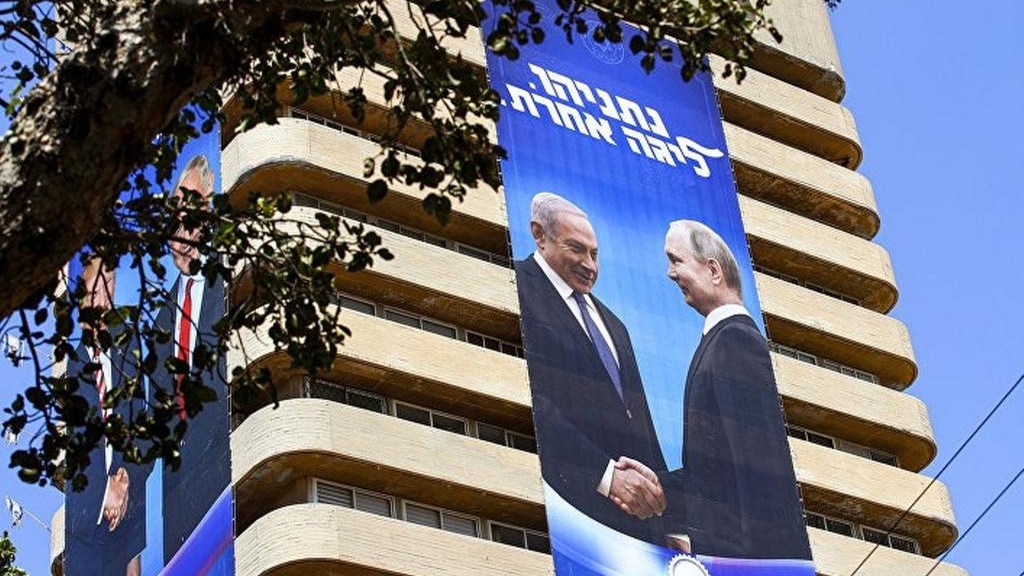
Unfortunately, unlike in April, when left-wing parties engaged with Russian-speaking voters — Hadash, for instance, opened a Russian-language campaign headquarters — this election has shown that left-wing parties have practically stopped working with them, leaving them to Yisrael Beiteinu and Likud, which is campaigning actively in Russian. Incidentally, Netanyahu's main Likud campaign materials are photographs with Trump and Putin. These posters cover cities throughout Israel.
Interestingly, the 'revolt of Ethiopian Jews', immigrants from Ethiopia whose protests paralyzed Israel for several days in July, helped activate the Russian-speaking sector. On the one hand, Russian-language networks reacted extremely negatively to the protesters' actions; on the other, it became evident that Ethiopian activism was bringing financial dividends to the community.
The prolonged political crisis and increasingly frequent elections give reason to expect Russian-speaking groups to continue their civic and political activity between elections as well.
Igor Kaminnik